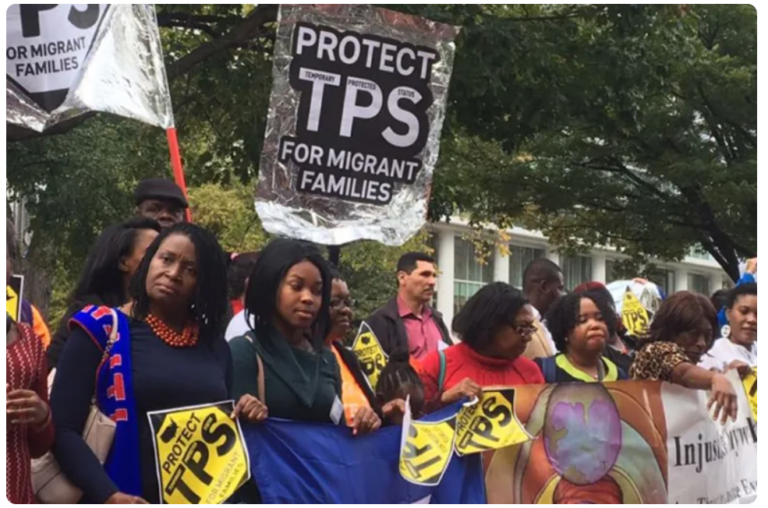
A government that serves its people should never fear public scrutiny. Transparency builds trust. Accountability protects it.
A Brief Recap of Week 4
Last week, we explored one of the most important foundations of every successful nation: The Rule of Law.
We learned that no individual should stand above the law—not presidents, ministers, judges, police officers, business leaders, or ordinary citizens.
A nation cannot enjoy lasting peace or prosperity if justice depends on wealth, political influence, or personal connections.
But even the strongest laws are not enough.
Laws must be supported by governments that are open with their citizens and leaders who accept responsibility for their decisions.
This brings us to another essential pillar of good governance:
Transparency and Accountability.
Épisode 5 – Transparence et responsabilité: les piliers qui soutiennent la démocratie
What Is Transparency?
Transparency means that government conducts the people’s business openly, honestly, and in a way that citizens can understand.
Government officials do not manage public money for themselves.
They manage it on behalf of the people.
Citizens therefore have a legitimate right to know:
- How tax revenues are collected.
- How public funds are spent.
- Who receives government contracts.
- How major decisions are made.
- What priorities guide public policy.
- Whether promises are being fulfilled.
Transparency creates confidence.
Secrecy creates suspicion.
What Is Accountability?
Accountability means that every public official is responsible for his or her actions and decisions.
Authority should never exist without responsibility.
Leaders should be prepared to explain:
- Why decisions were made.
- How public money was spent.
- Whether projects achieved their goals.
- What mistakes occurred.
- What corrective actions will be taken.
Great leaders do not fear accountability.
They welcome it because they understand that public trust is earned through honesty.
Why Transparency Matters
Transparency discourages corruption before it begins.
When financial records are open…
When government contracts are publicly available…
When budgets can be examined…
When citizens have access to reliable information…
It becomes much more difficult to misuse public resources.
Transparency protects both honest public servants and taxpayers.
Why Accountability Matters
Every successful organization—whether a family, business, school, church, or government—depends upon accountability.
Without accountability:
Mistakes are repeated.
Corruption spreads.
Public confidence disappears.
Institutions weaken.
With accountability:
Performance improves.
Integrity is rewarded.
Public confidence grows.
Government becomes more effective.
Accountability is not about punishment.
It is about responsibility.
The Warning Signs of Poor Transparency
Citizens should become concerned whenever they observe:
- Government budgets that cannot easily be understood.
- Major contracts awarded without competitive processes.
- Public officials refusing to answer legitimate questions.
- Financial reports that are delayed or unavailable.
- Independent oversight bodies being weakened.
- Decisions made without public explanation.
- Citizens discouraged from asking questions.
These warning signs do not automatically prove wrongdoing.
They do indicate that stronger oversight and greater openness may be needed.
Healthy democracies encourage questions because informed citizens strengthen—not weaken—the nation.
Haiti’s Continuing Challenge
Throughout Haiti’s history, citizens have repeatedly demanded greater transparency, stronger accountability, and more responsible stewardship of public resources.
Many Haitians have expressed concerns over how public funds have been managed, how major national projects have been administered, and whether institutions have always operated with sufficient independence and oversight.
These concerns have crossed political administrations and generations.
They are not the responsibility of one individual alone.
They point to the importance of building stronger institutions that serve the public consistently, regardless of who holds office.
A nation’s future should never depend solely upon the character of one leader.
It should depend upon institutions strong enough to protect the public interest under every administration.
Transparency Begins with Citizens
Transparency is not only the responsibility of government.
Citizens also have responsibilities.
An informed society asks thoughtful questions.
It seeks facts before forming conclusions.
It participates respectfully in public life.
It rejects misinformation.
It encourages honest debate.
Democracy flourishes when citizens are informed, engaged, and willing to hold both themselves and their leaders to high ethical standards.
What Strong Democracies Have in Common
Around the world, societies that consistently rank among the most stable and prosperous tend to share several characteristics:
- Open government records.
- Independent auditing institutions.
- Free and responsible journalism.
- Competitive and transparent procurement.
- Independent courts.
- Professional civil service.
- Active civic participation.
- Leaders who accept public scrutiny.
These principles are not unique to any one country.
They are foundations of effective governance wherever they are practiced.
A Vision for Haiti
Imagine a Haiti where every public project is tracked openly.
Where every tax dollar can be accounted for.
Where government contracts are awarded fairly.
Where citizens can easily understand national budgets.
Where independent institutions oversee public spending.
Where public officials view transparency as an obligation rather than a burden.
Such a nation would encourage investment.
Create jobs.
Strengthen public confidence.
Reduce opportunities for corruption.
Most importantly, it would restore hope.
Transparency does not solve every problem.
But without transparency, lasting solutions become much more difficult.
Final Reflection
Governments ask citizens to place their trust in public institutions.
Trust cannot be demanded.
Trust must be earned.
It is earned through honesty.
Through openness.
Through responsibility.
Through accountability.
A government that welcomes public scrutiny demonstrates confidence in its service.
A government that fears transparency risks losing the confidence of its people.
For Haiti—and for every democracy—the path toward stronger institutions begins with a simple principle:
The people have a right to know how their government serves them.
Community Discussion & Reflection
Good governance grows stronger when citizens ask thoughtful questions and participate respectfully in public life.
Discuss these questions with your family, neighbors, church members, coworkers, or classmates.
1. Why is transparency important?
How does open government help reduce corruption and increase public confidence?
2. What information should every citizen have access to?
Should national budgets, government contracts, public spending reports, and audit findings be easily available? Why?
3. What does accountability look like?
When public officials make mistakes, what should responsible leadership look like? How can accountability strengthen—not weaken—a democracy?
4. How can citizens promote transparency?
Beyond voting, what practical actions can citizens take to encourage openness, integrity, and responsible government?
5. How does transparency affect everyday life?
In what ways can greater openness improve schools, healthcare, roads, public safety, employment, and economic development?
6. What kind of Haiti do we want to build?
If future generations judge today’s citizens, what legacy of honesty, responsibility, and civic participation should we leave behind?
A Challenge for This Week
This week, choose one public issue that affects your community.
Learn about it from reliable sources.
Discuss it respectfully with your family or friends.
Ask thoughtful questions.
Listen carefully to different viewpoints.
Remember that democracy is strengthened not only by elections, but also by informed citizens who remain engaged throughout the year.
Knowledge leads to understanding.
Understanding inspires responsible action.
Responsible action helps build stronger institutions.
Coming Next Week
Week 6 – August 9, 2026
“Public Money, Public Trust: Why Responsible Financial Management Determines a Nation’s Future”
Next week, we will examine how governments collect, manage, and invest public funds, why fiscal responsibility matters, and how responsible budgeting can transform education, healthcare, infrastructure, security, and economic opportunity for future generations.
About The Author