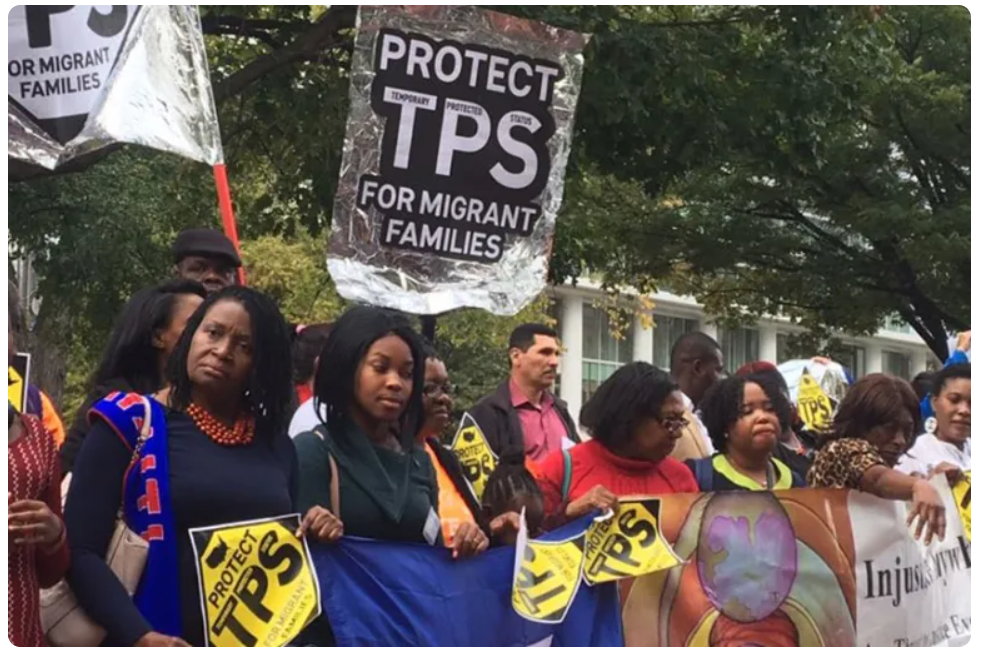
More Than 350,000 Lives Hang in the Balance
For more than a decade, Temporary Protected Status (TPS) has allowed hundreds of thousands of Haitians to live and work legally in the United States while their homeland has struggled through one crisis after another.
Today, approximately 350,000 Haitian TPS beneficiaries face tremendous uncertainty as the federal government moves toward ending Haiti’s TPS designation. Across Florida, New York, Massachusetts, New Jersey, Connecticut, Georgia, Texas, and many other states, families are asking the same questions:
- What happens next?
- Will families be separated?
- Where can we find legal help?
- How can we protect our children?
- What will happen if we are forced to return to Haiti?
These are not merely immigration questions.
They are humanitarian, economic, healthcare, national security, and moral questions.
What Is Temporary Protected Status (TPS)?
Temporary Protected Status is a humanitarian program established by Congress in 1990.
It allows nationals of countries experiencing extraordinary conditions—such as war, natural disasters, or humanitarian emergencies—to remain temporarily in the United States with authorization to work until conditions improve.
Haiti first received TPS after the devastating 2010 earthquake that killed hundreds of thousands of people.
Since then, Haiti has continued to experience severe instability, including:
- Political instability
- Government collapse
- Gang violence
- Kidnappings
- Widespread displacement
- Food insecurity
- Cholera outbreaks
- Limited healthcare access
- Economic collapse
Numerous international organizations continue to describe Haiti as facing one of the world’s worst humanitarian crises.
Haiti Remains in Crisis
Any discussion about ending TPS must begin with one simple question:
Is Haiti currently capable of safely receiving hundreds of thousands of returning citizens?
Many humanitarian organizations argue the answer remains no.
Large portions of Port-au-Prince remain under the influence of heavily armed gangs.
Thousands of families have fled their homes.
Schools have closed.
Hospitals struggle to operate.
Basic public services remain severely limited.
The U.S. government has repeatedly issued strong travel warnings advising Americans not to travel to Haiti because of kidnapping, violent crime, and civil unrest.
The Human Cost
Behind every TPS case is a family.
Many Haitian TPS holders have lived in America for over a decade.
Many have:
- American-born children
- Mortgages
- Businesses
- Careers
- Churches
- Community leadership roles
- College students
- Elderly parents who depend upon them
Their children often know no other home than the United States.
Ending TPS could force many families into impossible decisions:
Remain together in dangerous conditions abroad, or become separated across international borders.
Haiti Depends on Its Diaspora
The Haitian diaspora has long been one of Haiti’s greatest sources of stability.
Every year, Haitians living abroad send billions of dollars in remittances to support relatives.
These funds often pay for:
- Food
- Rent
- School tuition
- Medical treatment
- Elderly care
- Small businesses
For many households in Haiti, these remittances are their primary source of income.
A sudden loss of employment among large numbers of TPS holders could reduce financial support flowing to families already struggling with poverty and insecurity.
The Economic Impact on the United States
The discussion is not only about Haiti.
It is also about America.
TPS holders are workers.
They pay taxes.
They purchase homes.
They start businesses.
They spend money in local communities.
Many employers depend upon experienced Haitian workers.
Healthcare Could Face Serious Challenges
Perhaps no industry illustrates the impact more clearly than healthcare.
Across the United States, Haitian professionals serve as:
- Registered Nurses
- Licensed Practical Nurses
- Certified Nursing Assistants
- Home Health Aides
- Physical Therapy Assistants
- Medical Assistants
- Hospital staff
- Long-term care workers
- Hospice caregivers
Healthcare leaders have warned that losing large numbers of Haitian caregivers would worsen existing workforce shortages, particularly in nursing homes and long-term care facilities.
At a time when America continues facing shortages of healthcare workers, replacing experienced professionals would not be easy.
Patients could experience:
- Longer wait times
- Staffing shortages
- Increased overtime costs
- Higher operating expenses
- Reduced continuity of care
Other Industries Also Depend on Haitian Workers
Haitians contribute significantly across numerous sectors, including:
- Hospitality
- Hotels
- Tourism
- Construction
- Transportation
- Warehousing
- Manufacturing
- Food service
- Childcare
- Janitorial services
- Retail
- Education
- Logistics
Employers in these industries may face hiring challenges if experienced workers lose authorization to remain employed.
Why Many Believe Ending TPS Is a Mistake
Many immigration advocates, faith leaders, employers, healthcare organizations, and some elected officials argue that ending TPS at this time is a mistake for several reasons.
Among the arguments they raise are:
- Haiti continues to face severe humanitarian and security challenges.
- Many TPS recipients have lived lawfully in the U.S. for years, paying taxes and contributing to their communities.
- The loss of experienced workers could strain sectors already facing labor shortages, especially healthcare.
- Family separation may have lasting social and economic consequences.
- Reducing remittance income could worsen hardship for families in Haiti.
For example, U.S. Representative Carlos Giménez, a Republican from South Florida, publicly called deporting Haitians under current conditions a “huge mistake,” citing Haiti’s instability and the contributions Haitian workers make to the U.S. economy.
Reasonable people may disagree on immigration policy overall, but these concerns have been voiced across political, business, healthcare, and faith communities.
What Haitian Families Should Do Now
During this period of uncertainty, Haitian TPS holders should avoid making decisions based on rumors or social media.
Instead:
- Speak with a qualified immigration attorney or an accredited legal representative to review your individual options.
- Keep copies of immigration documents, passports, work permits, birth certificates, and other important records.
- Learn whether you may qualify for another immigration benefit based on your circumstances.
- Develop a family emergency plan, including contact information and care arrangements for children if needed.
- Stay informed through reliable sources such as USCIS and trusted legal organizations.
Organizations That May Be Able to Help
Depending on your location, the following organizations may offer legal clinics, referrals, education, or community support:
- Haitian Bridge Alliance
- Catholic Legal Services
- Haitian Lawyers Association
- Family Action Network Movement (FANM)
- Haitian-American Chamber of Commerce of Florida
- Americans for Immigrant Justice
- Legal Aid organizations in your state
- Local churches serving Haitian communities
Many organizations provide immigration referrals, know-your-rights workshops, and assistance locating qualified legal counsel.
Contact Your Elected Representatives
Citizens and lawful residents who wish to advocate for legislative or policy changes can contact their elected officials respectfully and constructively.
This may include:
- Their U.S. Representative
- Their two U.S. Senators
- Their Governor
- Their Mayor
- County Commissioners
- State legislators
Residents in South Florida may also wish to contact members of Congress representing districts with large Haitian-American communities.
Advocacy is most effective when it is peaceful, factual, respectful, and focused on specific policy requests.
The Importance of Community Unity
This is not a time for fear or misinformation.
It is a time for unity.
Churches.
Community organizations.
Attorneys.
Business leaders.
Healthcare professionals.
Educators.
Neighbors.
Families.
Working together can help ensure that individuals understand their legal rights, locate reliable information, and receive practical support.
A Call for Compassion and Practical Solutions
The debate over immigration policy is complex, and reasonable people can hold different views about how immigration laws should be enforced.
At the same time, policymakers must also weigh humanitarian realities, economic impacts, workforce needs, family stability, and conditions in countries receiving returning nationals.
For many Haitian families, the uncertainty surrounding TPS is deeply personal. For many American employers and healthcare providers, it is also a workforce issue. Thoughtful public policy benefits from considering both the rule of law and the real-world consequences of major policy changes.
As the nation continues this conversation, many hope that any long-term solutions will protect public safety, respect the law, preserve family unity where possible, and recognize the contributions that hardworking immigrants have made to communities across the United States.
Final Reflection
The Haitian people have demonstrated extraordinary resilience through earthquakes, hurricanes, political instability, economic hardship, and violence.
They have rebuilt families.
Built businesses.
Served in hospitals.
Started churches.
Educated children.
Cared for the elderly.
Strengthened neighborhoods.
Their story in America is one of perseverance, sacrifice, and hope.
Whatever policies emerge in the months ahead, this moment calls for wisdom, compassion, respect for the law, and a commitment to solutions that uphold both America’s humanitarian values and its long-term national interests.
About The Author