By Wilner Francois
For more than three decades, Chef Creole has been one of South Florida’s most recognizable Haitian-owned restaurant chains. Its restaurants have become gathering places where families celebrate birthdays, friends reconnect, and visitors experience authentic Haitian and Caribbean cuisine.
Today, however, the future of that iconic business is uncertain.
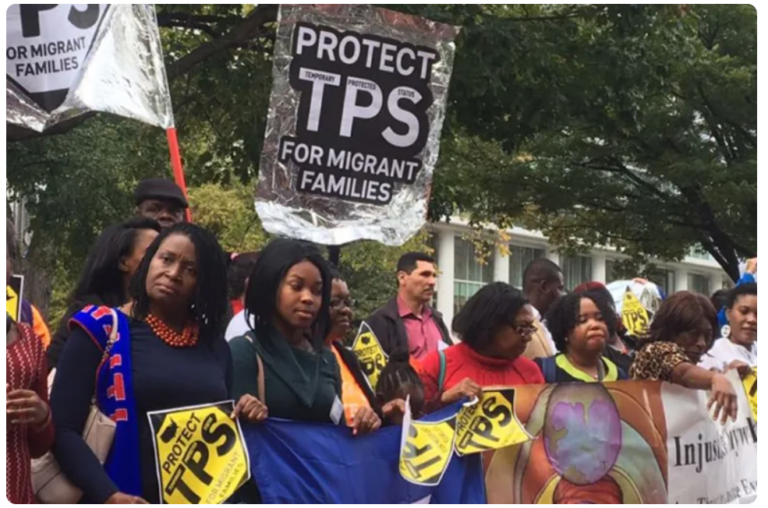
Wilkinson “Ken” Sejour, founder and owner of Chef Creole, has publicly acknowledged that he regrets voting for President Donald Trump after witnessing the consequences that the administration’s decision to end Temporary Protected Status (TPS) for hundreds of thousands of Haitians is having on his business. According to Sejour, he supported Donald Trump because he believed in Trump’s reputation as a businessman. But he now says the consequences of the administration’s immigration policy are threatening the very business he spent decades building. (Miami New Times)
A Business Built Over 30 Years Now Faces an Uncertain Future
Chef Creole has served South Florida since 1992 and has grown into one of Miami’s best-known Haitian restaurant brands.
According to Sejour, nearly his entire management team consisted of Haitian TPS recipients.
As TPS protections come to an end, many employees are leaving, fearful of detention or deportation, while others are no longer able to continue working legally if they lose their immigration protections.
Sejour has stated publicly that two of his restaurants have already closed and that the future of his remaining locations is uncertain because he has lost much of the experienced workforce that kept the business operating successfully. (Miami New Times)
His message is both personal and economic.
Without experienced employees, restaurants cannot simply continue operating as if nothing has changed.
“I Voted for the Businessman”
Perhaps the most striking part of Sejour’s public comments was his explanation for supporting Donald Trump.
He explained that he voted for Trump because he believed he was voting for a successful businessman who understood economic growth and entrepreneurship.
When asked whether he regretted that decision today, his answer was simple:
“Yes.” (Miami New Times)
His experience illustrates how public policy can produce unexpected consequences for business owners, including those who initially supported those policies.
What Is Temporary Protected Status (TPS)?
Temporary Protected Status (TPS) is a humanitarian immigration program created by the U.S. Congress through the Immigration Act of 1990.
It allows nationals of designated countries already present in the United States to remain temporarily when returning home would be unsafe because of:
- War or armed conflict
- Natural disasters
- Epidemics
- Extraordinary humanitarian crises
Individuals granted TPS may receive:
- Protection from deportation
- Authorization to work legally
- Permission to remain temporarily in the United States while conditions remain dangerous in their home country
TPS does not provide permanent residency or citizenship. Instead, it is a temporary humanitarian protection that must be renewed periodically by the federal government.
Haiti and TPS: A Long History
Haiti first received TPS designation after the devastating January 12, 2010 earthquake that killed more than 200,000 people, displaced over a million residents, and destroyed much of the country’s infrastructure.
Since then, Haiti has endured repeated crises, including:
- A devastating cholera epidemic.
- Hurricane Matthew in 2016.
- Political instability.
- The assassination of President Jovenel Moïse in 2021.
- A catastrophic 7.2 magnitude earthquake in 2010.
- Widespread gang violence.
- Economic collapse.
- Severe humanitarian shortages.
Successive U.S. administrations repeatedly extended TPS for Haiti because of these ongoing conditions.
The Decision to End TPS
The Trump administration announced its intention to terminate TPS protections for Haitians, arguing that Haiti no longer met the statutory conditions for the program. After extensive litigation, recent court developments have allowed the administration to move forward with ending protections for hundreds of thousands of Haitian TPS beneficiaries. Supporters of the decision argue that TPS is intended to be temporary and should not become a long-term immigration status. Critics contend that Haiti continues to face extraordinary humanitarian and security challenges, making large-scale returns unsafe. (Miami New Times)
The Economic Ripple Effect
The debate surrounding TPS extends far beyond immigration policy.
It affects the American economy.
Many TPS recipients have lived and worked legally in the United States for more than a decade.
They have become:
- Restaurant managers
- Nurses
- Nursing assistants
- Hotel supervisors
- Construction workers
- Truck drivers
- Teachers
- Home health aides
- Small business owners
- Taxpayers
Many employers have invested years in training these workers.
Replacing experienced employees is neither immediate nor inexpensive.
Hospitality Could Be Among the Hardest Hit
The hospitality industry depends heavily upon experienced workers.
Restaurants cannot function without:
- Managers
- Kitchen supervisors
- Chefs
- Servers
- Food preparation staff
- Cleaning personnel
- Administrative employees
When experienced workers disappear almost overnight, businesses often face:
- Reduced operating hours.
- Longer wait times.
- Increased labor costs.
- Hiring shortages.
- Lower customer satisfaction.
- Restaurant closures.
Chef Creole may represent one of the first highly visible examples of these challenges, but many other businesses across South Florida could experience similar difficulties if large numbers of longtime workers leave the labor force. (Miami New Times)
Beyond Restaurants
The impact is expected to extend well beyond hospitality.
Industries that rely heavily on immigrant labor include:
- Healthcare
- Elder care
- Agriculture
- Construction
- Transportation
- Landscaping
- Manufacturing
- Hospitality
- Childcare
Labor shortages in these sectors could increase operating costs, slow business growth, and create staffing challenges for employers.
South Florida’s Haitian Community
South Florida is home to one of the largest Haitian communities outside Haiti.
Thousands of Haitian-owned businesses contribute significantly to the regional economy.
These businesses:
- Create jobs.
- Pay taxes.
- Purchase local goods.
- Support charities.
- Invest in neighborhoods.
- Serve millions of customers annually.
When immigration policy affects workers, the consequences often extend to employers, customers, suppliers, landlords, and entire communities.
A Story Larger Than One Restaurant
The challenges facing Chef Creole highlight a broader question about the relationship between immigration policy and the American economy.
Whether one supports or opposes the end of TPS, the experience described by Wilkinson “Ken” Sejour demonstrates that changes in immigration policy can have significant consequences for employers, workers, and local communities. His story illustrates how decisions made in Washington can directly affect businesses, jobs, and neighborhoods far from the nation’s capital. (Miami New Times)
Conclusion
The story of Chef Creole is more than the story of one restaurant owner.
It reflects the intersection of immigration, labor, economics, and public policy.
As the United States continues to debate immigration reform, the experiences of businesses like Chef Creole will likely remain part of the national conversation.
The coming months may determine not only the future of one of Miami’s most recognizable Haitian restaurant chains, but also provide insight into how major immigration policy changes affect employers, employees, and local economies across the country.
About The Author