He came to America to study, not to commit a crime. He dreamed of becoming a doctor. At only 20 years old, Pierre Damas Bel is dead—and his family and community are demanding answers.
There are moments when an immigration policy stops being an abstract political debate and becomes painfully, devastatingly human.
The death of Pierre Damas Bel, a 20-year-old Haitian immigrant and college student from Springfield, Ohio, is one of those moments.
On Monday, August 31, 2026, Pierre died after being struck by a tractor-trailer on Interstate 70 near Springfield. His family believes he deliberately walked into traffic after weeks of emotional distress, humiliation, bullying, and fear following the placement of a GPS ankle monitor on him by U.S. Immigration and Customs Enforcement.
The Ohio State Highway Patrol says the circumstances surrounding his death remain under investigation.
But Pierre’s family says something else must also be investigated:
What happened to this young man before he reached that highway?
And America should listen.
Pierre Damas Bel Was More Than an Immigration Case
Pierre was not simply an immigration file number.
He was a son.
A brother.
A student.
A soccer player.
An honors graduate.
A young Haitian man building a future in America.
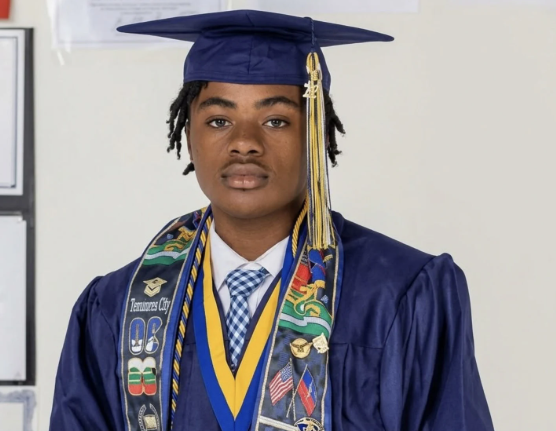
He graduated from Springfield High School in May, participated in Junior ROTC and the National Honor Society, played varsity soccer, and had begun studying neuroscience at Wright State University.
His ambition was extraordinary but simple:
Pierre wanted to become a doctor.
His teachers reportedly described a young man who valued education, helped other students and even translated for classmates when necessary.
According to his family and those who knew him, Pierre had no criminal record—not even a traffic ticket.
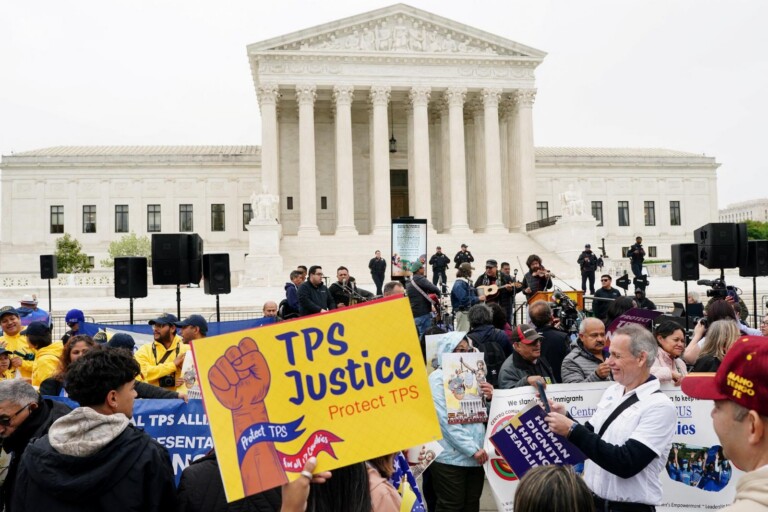
Yet after the Trump administration ended Temporary Protected Status protections for hundreds of thousands of Haitians, Pierre found himself under immigration supervision.
On July 29, ICE placed a GPS monitoring device around his ankle while his immigration proceedings continued.
For Pierre, that device became far more than a piece of technology.
It became a symbol of humiliation.
“I Didn’t Come Here to Commit a Crime”
Before his death, Pierre told the world exactly how he felt.
In a July Instagram post, he wrote:
“I came to this country to pursue my education. I didn’t come here to commit a crime or hurt anyone.”
He described walking through America wearing a GPS monitor and carrying feelings of “shame and humiliation.”
Those words deserve America’s attention.
Pierre said he came here to study, build his future and live a better life—not to be treated like a criminal.
His father says Pierre traveled to ICE offices seeking to have the monitor removed so that he could continue playing soccer.
It remained.
His father also said Pierre was humiliated when other students received JROTC uniforms while he did not, reportedly because of the ankle monitor.
According to his family, classmates bullied him because of it.
Then came Monday morning.
Pierre called his father shortly after 8 a.m.
According to his father’s account, Pierre told him:
“Dad, I’m not feeling okay mentally because of the bullying.”
His father told him to come home so they could talk.
Hours later, police arrived at the family’s home.
Pierre was dead.
He was 20 years old.
His Family Says Immigration Policy Played a Role in His Death
We must be precise about what is known and what remains under investigation.
ICE did not physically cause the collision that killed Pierre, and the Ohio State Highway Patrol is still investigating his death.
ICE has also rejected attempts to hold the agency responsible for Pierre’s death.
But Pierre’s family, Haitian community leaders and immigrant advocates are making a different argument.
They say the policies that stripped away his protection, subjected him to electronic monitoring and left him feeling publicly branded as a criminal contributed directly to the despair he described before his death.
Pierre’s father said his son felt as though he had been “treated like an animal.”
Guerline Jozef of the Haitian Bridge Alliance has said the administration’s policies caused Pierre’s untimely death.
Community advocates in Springfield are now demanding an end to the widespread use of ankle monitors on Haitian immigrants.
Their accusations deserve serious examination—not dismissal.
Immigration Enforcement Cannot Mean Dehumanization
President Donald Trump repeatedly presented his immigration agenda to Americans as an effort to remove dangerous criminals from the country.
That raises a fundamental question:
What danger did Pierre Damas Bel represent?
Where was the violent crime?
Where was the threat to public safety?
Here was a 20-year-old college student pursuing neuroscience, playing soccer, participating in JROTC and dreaming of medical school.
Immigration law can be enforced without treating every immigrant as though he or she is dangerous.
A person can have an unresolved immigration case without being a criminal.
A person can lose an immigration protection without becoming a threat to society.
And government authority does not eliminate the government’s responsibility to exercise discretion, proportionality and basic humanity.
There is an enormous difference between pursuing someone convicted of violent crimes and placing a college student with no reported criminal record under conspicuous electronic surveillance.
If immigration enforcement humiliates people who pose no demonstrated threat to public safety, Americans have every right to ask whether that enforcement has crossed from legitimate government administration into unnecessary punishment.
Springfield’s Haitian Community Has Already Endured Enough
Pierre’s death also cannot be separated from what Springfield’s Haitian community has endured.
During the 2024 presidential campaign, Donald Trump and JD Vance amplified false allegations that Haitian immigrants in Springfield were stealing and eating residents’ pets.
Those claims were unsupported.
But the consequences were real.
The city experienced threats, evacuations and extraordinary tension.
Now, two years later, Haitian families in Springfield are confronting another source of fear: immigration enforcement and the possibility of deportation to Haiti, a country suffering through extraordinary insecurity and gang violence.
Hundreds of Haitians in the Springfield area have reportedly been placed under electronic monitoring.
More than 40 Haitians in Springfield have reportedly been detained by ICE, according to local advocates.
For families who work, attend school, pay rent or mortgages, raise children, attend churches and contribute to their communities, daily life has increasingly become intertwined with fear.
That is not merely an immigration story.
It is a human story.
We Demand Accountability—And an Independent Investigation
Pierre’s death should not disappear from the news cycle after a few days.
There must be a thorough, transparent investigation—not only into the immediate circumstances of his death, which Ohio authorities are already investigating, but into the immigration enforcement decisions preceding it.
Congress, federal oversight authorities and appropriate independent investigators should examine:
- Why Pierre was selected for GPS monitoring despite having no reported criminal record.
- What criteria ICE is using to place Haitian immigrants on ankle monitors.
- Whether individualized risk assessments are being conducted before imposing electronic monitoring.
- Whether Pierre’s requests to have his monitor removed were properly reviewed and documented.
- Whether officials were aware of the psychological distress he reported.
- How many Haitian immigrants in Springfield have been placed on electronic monitoring despite having no criminal convictions.
- Whether ICE’s enforcement strategy in Springfield is consistent with due process, agency policy and constitutional protections.
- Whether adequate safeguards exist for immigrants experiencing severe emotional distress while under government supervision.
- Whether current enforcement practices unnecessarily stigmatize immigrants as criminals.
Those are legitimate questions for a democratic society.
Calling an immigration operation “illegal” before a court or investigation has established illegality would go beyond the evidence currently available.
Demanding that its legality, proportionality and human consequences be independently investigated does not.
Even Ohio’s Republican Governor Is Asking Questions
This tragedy is bigger than political party.
Ohio Governor Mike DeWine, a Republican, called Pierre’s death a “horrible, horrible tragedy.”
He reminded the public that Pierre graduated from an Ohio high school, participated in JROTC and had dreams about what he could accomplish and contribute to America.
Then Governor DeWine raised the question Americans across the political spectrum should consider:
Are these really the people we want our government pursuing for deportation?
That question deserves an answer.
A Haitian Family Is Now Living Every Parent’s Nightmare
Behind every immigration statistic is a human being.
Behind Pierre was a mother.
A father.
Two younger siblings.
Friends.
Teachers.
Classmates.
A Haitian community that watched a promising young man graduate from high school and begin college.
His family should have been preparing to celebrate his college accomplishments.
They should have been watching him graduate.
Perhaps one day they would have watched him walk across another stage and receive a medical degree.
Instead, they are preparing to bury him.
No immigration debate should make us incapable of recognizing the enormity of that loss.
Pierre’s Death Must Mean Something
Pierre Damas Bel came to America believing education could transform his future.
He studied.
He worked.
He played soccer.
He joined JROTC.
He graduated with honors.
He enrolled in college.
He dreamed of medicine.
And before his death, he publicly told America that the way he was being treated made him feel ashamed and humiliated.
We cannot hear those words now and pretend they never existed.
We cannot simply reduce Pierre to an immigration status.
And we cannot allow the political arguments surrounding immigration to erase his humanity.
The Haitian community deserves answers.
The Bel family deserves answers.
Springfield deserves answers.
And Americans deserve to know whether immigration policies being carried out in their name are protecting the country—or unnecessarily destroying the dignity of people who pose no threat to it.
Enforcing immigration law and respecting human dignity are not mutually exclusive.
America can protect its borders.
America can remove individuals who genuinely threaten public safety.
America can enforce its laws.
But America must also remember that government power carries responsibility.
Pierre Damas Bel was someone’s child.
He had a future.
He had dreams.
He wanted to become a doctor.
Today, those dreams are gone.
Rest in peace, Pierre Damas Bel.
May his family find strength through an unimaginable period of grief.
May Springfield’s Haitian community stand together rather than surrender to fear.
And may Pierre’s death compel elected officials, journalists, civil-rights organizations, immigration authorities and ordinary Americans to ask the difficult questions that must now be answered.
Justice begins with truth.
Accountability begins with investigation.
And humanity begins when we refuse to look away.
About The Author