Community

The Christian Call to Defend the Poor: A Responsibility for Both Believers and Government

In a world filled with abundance yet scarred by inequality, the message of Christ resounds with clarity: we are called to defend, uplift, and provide for the poor. To call ourselves Christians means more than wearing the name—it means living the life Christ lived, serving as He served, and loving as He loved.

Jesus Himself declared His mission in Luke 4:18:

“The Spirit of the Lord is upon me, because he has anointed me to proclaim good news to the poor. He has sent me to proclaim freedom for the prisoners and recovery of sight for the blind, to set the oppressed free.”

This verse alone should compel every believer to look beyond personal comfort and recognize the suffering of others. To neglect the poor is to deny the very heart of Christ.

Would Christ Be Pleased With Us?

If Jesus walked among us today, would He be pleased with the way we treat the underprivileged? Would He smile at how His followers live out His teachings—or would He grieve at the neglect, division, and selfishness that leave so many behind?

Matthew 25:35–36 provides a sobering reminder of what He expects:

“For I was hungry and you gave me something to eat, I was thirsty and you gave me something to drink, I was a stranger and you invited me in, I needed clothes and you clothed me, I was sick and you looked after me, I was in prison and you came to visit me.”

Here, Jesus reveals that the true measure of our faith is not found in empty words but in tangible actions—feeding, clothing, and caring for the poor and marginalized.

The Biblical Call to Care for the Poor

Scripture repeatedly emphasizes God’s heart for the oppressed:

  • “Defend the weak and the fatherless; uphold the cause of the poor and the oppressed.” — Psalm 82:3
  • “Whoever is kind to the poor lends to the Lord, and He will reward them for what they have done.” — Proverbs 19:17
  • “If anyone has material possessions and sees a brother or sister in need but has no pity on them, how can the love of God be in that person?” — 1 John 3:17

These verses remind us that generosity is not optional—it is a command from God, and a reflection of His very nature.

The Role of Government in Defending the Poor

While individual Christians have a direct call to care for the needy, Scripture also affirms that governing authorities bear responsibility in promoting justice. Romans 13:4 calls government leaders “God’s servants for your good.” That good includes creating structures that defend and protect the vulnerable.

Responsibilities of Government Toward the Poor:

  1. Protect the Weak and Vulnerable — Ensuring laws and systems do not exploit the powerless (Isaiah 10:1–2).
  2. Provide for Basic Needs — Supporting policies that secure access to food, shelter, and healthcare (Deuteronomy 15:7–8).
  3. Promote Justice and Equality — Making sure that justice is not reserved for the wealthy, but available to all (Proverbs 31:8–9).
  4. Encourage Compassionate Governance — Leading with mercy rather than greed, prioritizing the common good (Micah 6:8).
  5. Create Opportunities — Providing education, jobs, and fair wages that enable people to rise out of poverty (Leviticus 25:35).

A Shared Responsibility

Caring for the poor is not simply a charitable option—it is both a Christian mandate and a civic duty. When we neglect the least among us, we dishonor Christ and undermine the moral fabric of our society.

As children of God, we must not turn a blind eye to suffering. As citizens, we must hold our governments accountable to their God-given responsibility to protect, provide, and promote justice for all.

Final Call

To be Christian is to live like Christ—compassionate, selfless, and unwavering in love for the least of these. The question remains: when Christ looks at our lives and our nation, will He find us faithful?

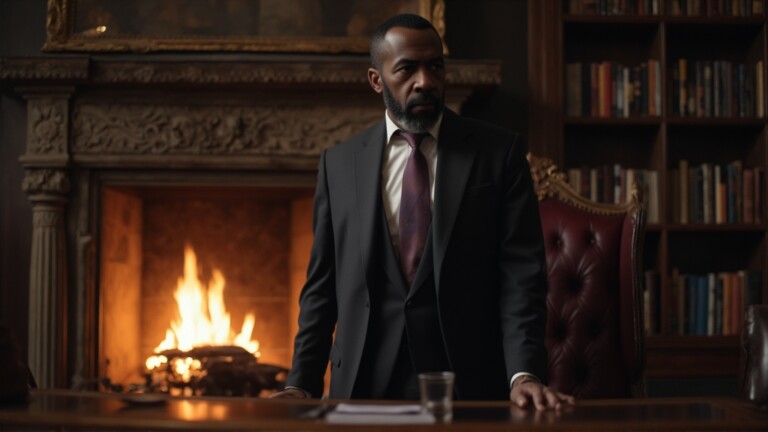
THE FIGARO LEGACY: Season 1, Episode 2: Cracks in the Façade

In Season 1, Episode 2 of The Figaro Family Secrets / Legacy, titled “Cracks in the Façade,” the illusion of perfection surrounding the Figaro dynasty begins to splinter. As scandal erupts following Robert Figaro Jr.’s reckless night with elite socialite Céleste Dubois, headlines ignite a media firestorm threatening to unravel the family’s carefully crafted reputation. Behind closed doors, tensions flare—Robert Sr. demands answers, Fernande sharpens her authority, and secrets bubble beneath their luxurious exterior.

Meanwhile, Fernande Figaro shares a dangerously intimate moment with the enigmatic Dr. Theodore Fillier, hinting at desires that could shatter loyalties. In a chilling twist, a cryptic message delivered to Robert Sr. rekindles buried sins from his past… and the return of a symbol he thought destroyed forever.

This episode peels back the layers of power, privilege, and betrayal in Haiti’s most elite family—where every gesture hides a secret and every secret has a price.

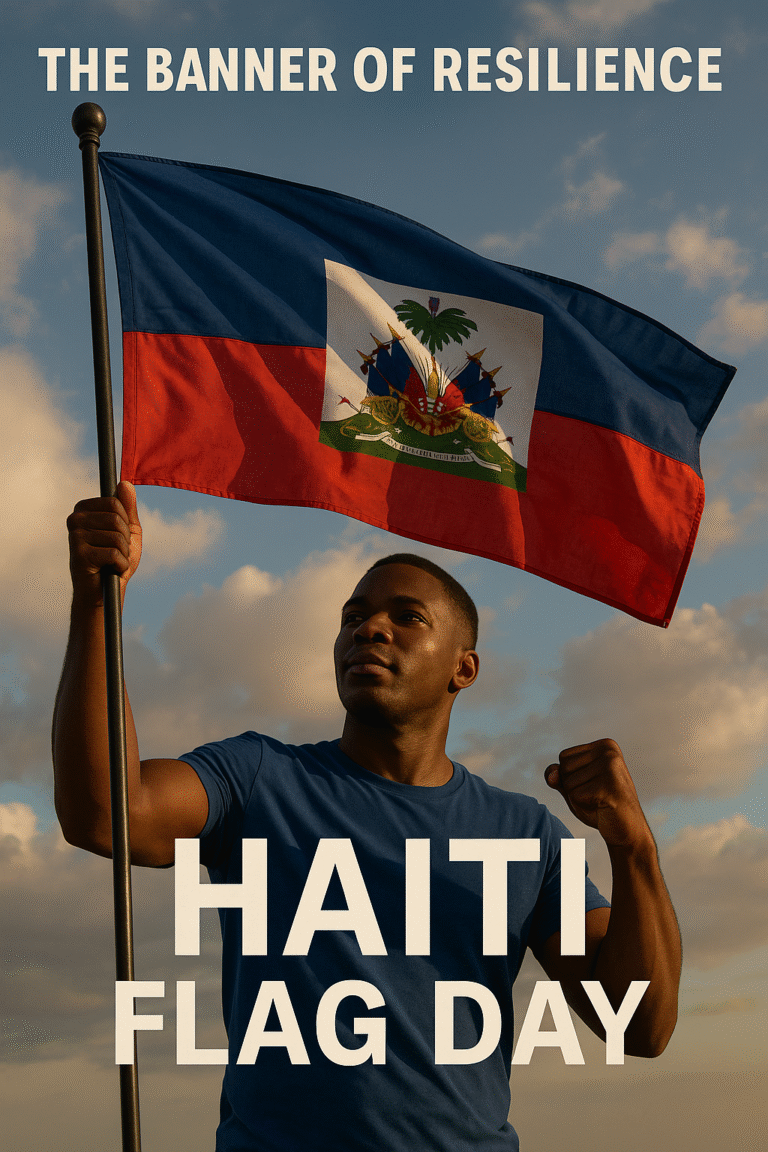
The Banner of Resilience: Haiti’s Flag, Our Strength, Our Soul

Haitian Flag Day, Catherine Flon, Haiti flag history, Haitian national anthem, Haitian culture, Haitian independence, Haitian parade, May 18, Haitian pride

On May 18th, Haitians across the globe stand tall beneath a flag that is more than just cloth and color — it is the symbol of our freedom, our fight, our unbreakable spirit. Haitian Flag Day is not just a celebration. It is a declaration to the world: that Haiti may bend, but it will never break.

This sacred date, born from rebellion and sewn with purpose, reminds us every year of the boldness of our ancestors and the brilliance of their vision. It tells the story of a people who refused to be enslaved. And in the hands of a courageous woman named Catherine Flon, that story was stitched into history.


The Birth of the Haitian Flag: A Moment of Defiance

The Haitian flag was created on May 18, 1803, at the Congress of Arcahaie, as revolutionary leaders prepared to launch their final blow against French colonial rule. It was on that day that Jean-Jacques Dessalines, one of Haiti’s greatest liberators, made a symbolic and radical gesture.

He took the French tricolor — blue, white, and red — and ripped out the white stripe, representing the rejection of the colonizers, of slavery, of domination. He then asked his goddaughter, Catherine Flon, a proud Haitian woman, to sew together the remaining blue and red bands — blue for the Black citizens, red for the people of mixed ancestry — symbolizing the unity of the people in their fight for freedom.

That flag became the soul of a nation not yet born, but already alive with the fire of liberty. It is the very first symbol of Black independence in the world.

“Colorful Haitian Flag Day parade in front of the National Palace with marching band and national flag”
“Haitian man proudly raising the flag at sunset, symbolizing unity and resilience”

Catherine Flon: The Seamstress of Revolution

Catherine Flon’s name must be spoken with reverence. She was not just a seamstress — she was a heroine of the revolution, trusted with the creation of a symbol that would represent a break from tyranny and the birth of hope.

Her needle wove together not only fabric but an unspoken vow between the generations: that Haiti will always rise, no matter how many times it is pushed down.


A Nation Celebrates: Unity in Music, Color, and Spirit

Every May 18th, Haitians come alive. In every town and city, marching bands echo through the streets, children wave flags in vibrant parades, and voices lift up in songs of pride. The sound of conch shells, drums, trumpets, and traditional “banda” music fills the air — an anthem of resilience that never grows old.

In churches, the Te Deum is sung — a solemn hymn of praise and thanksgiving, offered in remembrance of our ancestors’ victory and in hope for the nation’s healing.

Schools organize performances, cultural exhibitions, and flag-raising ceremonies where students dress in the national colors — blue and red — with heads held high.

Diaspora communities around the world also take part in celebrations, organizing festivals, concerts, and educational forums to teach younger generations about the importance of this powerful day.

This isn’t just a holiday. It is a sacred promise.


The Haitian National Anthem

No celebration of our flag is complete without the Haitian National Anthem, a song of defiance, dignity, and devotion to our beloved land.

La Dessalinienne

Chant National d’Haïti

Pour le pays, pour les ancêtres,
Marchons unis, marchons unis.
Dans nos rangs point de traîtres.
Du sol soyons seuls maîtres.
Marchons unis, marchons unis
Pour le pays, pour les ancêtres.

Pour les Aïeux, pour la Patrie
Béchons joyeux, bechons joyeux.
Quand le champ fructifie
L’âme se fortifie.
Béchons joyeux, béchons joyeux
Pour les Aïeux, pour la Patrie.

Pour le pays et pour nos pères
Formons des fils, formons des fils
Libres, forts et prospères.
Toujours nous serons fiers.
Formons des fils, formons des fils
Pour le pays et pour nos pères.

Pour les Aïeux, pour la Patrie
Marchons, marchons, marchons unis.
Dans nos rangs point de traîtres
Du sol soyons seuls maîtres.
Marchons unis, marchons unis
Pour les Aïeux, pour la Patrie.


More Than a Flag — A Flame That Still Burns

The Haitian flag is not a relic of the past. It is a living force, carried by every Haitian who dares to dream, to resist, and to rebuild.

Today, Haiti faces unimaginable challenges — from gang violence to political instability to hunger. But we carry within us the same fire that roared in Dessalines, in Catherine Flon, in our enslaved ancestors who refused to bow.

Our flag is not a symbol of despair. It is a battle cry. It tells the world, “We are here. We are Haitians. And we will not surrender.”

Let it fly higher than ever before.
Let every child know what it stands for.
Let every Haitian walk with its colors beating in their chest.

Our lighthouse shines, brighter than ever. The world will see it. Haiti will rise.

Viv drapo Ayiti! Viv endepandans nou! Viv Ayiti!

 The Figaro Legacy – Season 1, Episode 1: A Picture of Perfection

Description:
Step inside the golden world of The Figaro Legacy, where power, privilege, and secrets collide behind the gates of Haiti’s most powerful family. In this premiere episode, A Picture of Perfection, the prestigious Figaro family hosts an opulent gala at their hilltop estate — a glittering display of wealth and influence. But as guests toast to tradition and success, the perfect image begins to crack.

Beneath the ballroom chandeliers, whispers of betrayal stir between Robert and Fernande Figaro. Their children hide secrets of their own — flirtations, drunken confessions, and a mysterious phone call that could destroy everything. And in the shadows beyond the estate, a figure watches… wearing a ring that bears the family crest.

Narrated with chilling precision by Ash Turbo (AI British voice), this dramatic web series unveils the legacy no one dares question — until now.

🔥 New episodes every week
🔔 Subscribe and turn on notifications
💬 Leave a comment and share your theories — who is the man in the shadows?

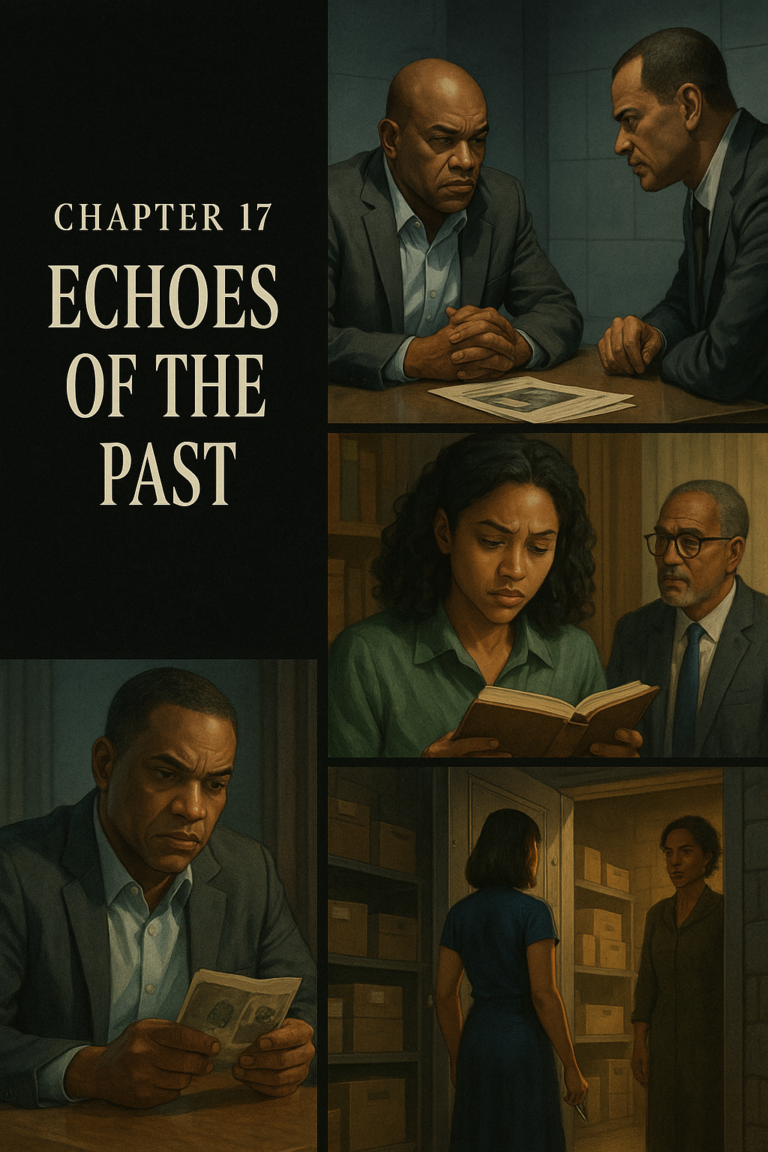
Chapter 17: Echoes of the Past

Rain lashed against the glass windows of the Figaro estate, mimicking the storm that now raged within its walls.

Robert Figaro Sr., once untouchable, sat inside a cold interrogation room at Port-au-Prince’s elite anti-corruption unit. The powerful patriarch, now stripped of his tailored suits and dignity, refused to speak. Detective Gaspard leaned across the table, sliding a manila envelope toward him.

“You should know, Robert,” Gaspard whispered, “this file didn’t come from us. Someone from your past wanted to finish what they started.”

Robert’s hands trembled. Inside the envelope were faded photographs—ones he hadn’t seen in decades. A child. A woman. A bloodied contract. All tied to an estate buried in the northern hills of Haiti. Secrets he thought he had buried long ago now clawed their way back to the surface.


The Journal Speaks

Back at the mansion, Régine clutched the leather-bound journal tighter. Her eyes scanned the pages Theodore Fillier had once begged Fernande to keep hidden.

What she found wasn’t just scandal—it was devastating.

Her mother Fernande had once been promised to another—Theodore’s older brother. But when he mysteriously disappeared during a “business trip” with Robert Figaro Sr., Fernande was married off within days. The journal suggested Robert had arranged more than just a marriage. He’d orchestrated a disappearance.

Tears blurred Régine’s vision. Her mother was not the victim she’d imagined—nor the heroine. She was a woman cornered, silenced, and yet complicit.

Régine made one decision that would change everything.


Theodore’s Dilemma

Dr. Theodore Fillier paced his clinic in Pétion-Ville. Word of Robert’s arrest had spread like wildfire, and with it, whispers of his own involvement resurfaced. His love for Fernande had never faded, but now he felt something he never expected: regret.

That night, Régine met Theodore under the guise of a confidential meeting. But what unfolded was not a casual encounter.

She threw the journal on the table.

“You were supposed to protect her. You loved her. But you let him win,” she said with fire in her voice.

Theodore’s face paled. “I was young… I didn’t have the power then.”

“You do now,” she shot back. “Help me take him down. Not just my father… all of them.”

For the first time, Régine Figaro was no longer just the youngest daughter. She was becoming the storm.


Marie-Elizabeth’s Breaking Point

Marie-Elizabeth, tightly wound in the silk threads of her father’s political aspirations, discovered she had been under surveillance by her fiancé’s private firm for over a year—paid for by Robert Sr.

The betrayal shattered her. In a single night, she ended her engagement, leaked private Figaro Foundation documents to a journalist, and sent a final warning text to her brother:

“We are all pawns in his empire. Time to flip the board.”


Robert Jr.: A Dangerous Alliance

Meanwhile, Robert Jr., hiding in a coastal villa near Jacmel, made an unthinkable alliance—with a former arms dealer who had once been blacklisted by the Figaro empire.

The deal? Immunity for Robert Jr. in exchange for names, offshore accounts, and a key. The same one that unlocked the mysterious vault beneath the estate.

The vault would change everything.


Final Scene: The Vault

Late at night, Régine returned to the estate. Alone.

With the journal in one hand and the mysterious key sent by her brother, she descended into the stone cellar beneath the main house.

The lock clicked.

As the door creaked open, Régine gasped.

Inside were stacks of sealed boxes, video tapes, and a metal cabinet labeled: “Fidelis Project – 1985”.

She barely had time to read the label before someone stepped behind her.

“You shouldn’t be here.”

Régine turned, frozen.

It was Fernande.


TO BE CONTINUED…

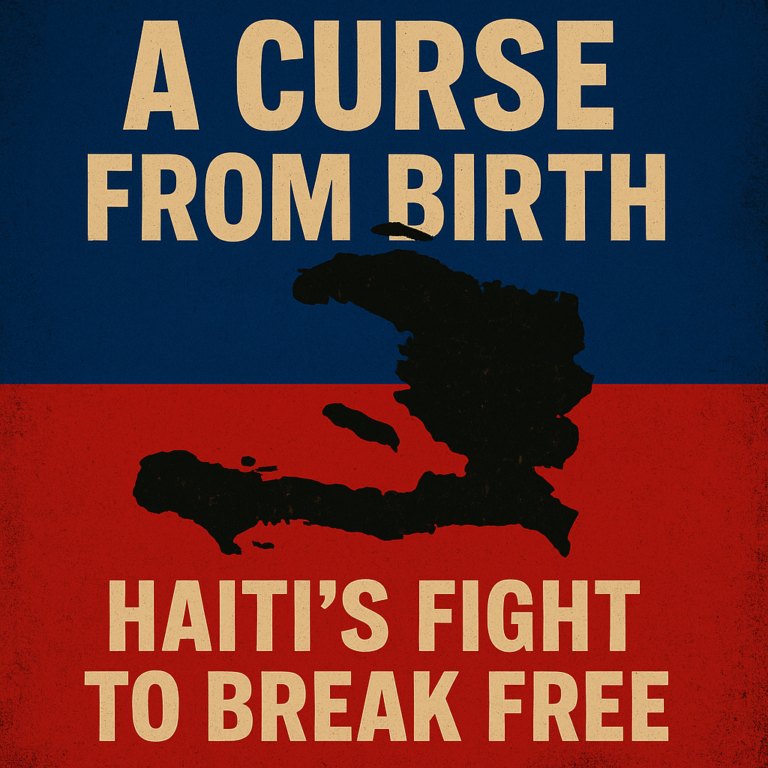
A Curse from Birth: Haiti’s Fight to Break Free from the Chains of History

From the ashes of slavery, a revolution was born. In 1804, Haiti shattered the unthinkable—it became the first Black republic, the first nation in the Western Hemisphere to declare independence through a slave revolt. Our ancestors, led by titans like Jean-Jacques Dessalines, Toussaint Louverture, and Henri Christophe, crushed the mightiest empire of the time and rewrote the narrative of freedom. The world watched in disbelief. A nation of former slaves had dared to rise.

But from that triumphant moment, Haiti was cursed—not by the heavens, but by the very hands of those who lost power when we stood up. From the moment of our birth as a nation, the world turned its back. And worse—it bled us dry.

The Ransom That Stole Our Future

In 1825, France—humiliated by the success of Haiti’s revolt—returned with warships and a brutal ultimatum: Pay 150 million gold francs or face total destruction. This was the price France demanded as “compensation” for the loss of their enslaved property: our freedom, our dignity, our very existence.

The young Haitian nation, still reeling from war, had no choice. We began repaying this ransom—a debt that would chain us economically for over a century. A debt that strangled our development and buried our dreams. That money, which could have built schools, hospitals, roads, and a thriving economy, instead filled the coffers of our former oppressors.

Imagine what Haiti could have become. That ransom set the foundation for the poverty we know today. It was the beginning of a generational curse, not of our making, but of colonial revenge.

Exploitation Without Mercy

As time went on, other nations joined in the bleeding of Haiti. Our soil is rich with gold, bauxite, copper, and iridium. Our land, our waters, our people—they have all been exploited without shame.

The United States, under the guise of protection and stability, occupied Haiti from 1915 to 1934. During this occupation, they rewrote our constitution to allow foreign ownership of land, took control of our finances, and treated our people as less than human. And long after they left, the influence remained—quiet, deep, and damaging.

Foreign companies have extracted our natural resources with minimal regulation and no fair compensation. Haiti has been treated not as a nation, but as a mine—dug, depleted, and discarded.

The Betrayal Within

But the tragedy of Haiti is not just what has been done to us. It is also what we have done to ourselves. Our founding fathers gave us a gift unlike any other—a free Black nation. But that gift has been squandered by decades of internal betrayal, failed leadership, and corruption.

We’ve allowed our political systems to rot. We’ve let greed eat away at the heart of our institutions. We have watched, for generations, as opportunities to rebuild were replaced with cycles of dysfunction.

And while the international community continues to exploit, ignore, or destabilize, the bitter truth remains: we too have failed our homeland.

Reclaiming the Pearl of the Antilles

But Haiti is not dead. Haiti is not hopeless. Haiti is wounded, but she is still ours. She is our mother, our blood, our pride, and it is our duty to lift her from the ashes.

To break this curse, we must unite. Not tomorrow—now.

  • The youth must rise—not just in anger, but in purpose. The revolution needs visionaries, builders, thinkers, and protectors.
  • The elders, guardians of memory and tradition, must guide and inspire.
  • The intellectuals, too long divided by ego and politics, must come together with the less educated, the street vendors, the farmers, the teachers, and the healers.
  • Our diaspora, one of our greatest strengths, must stop watching from afar. Your education, your resources, your influence—Haiti needs all of it.

We need brilliant minds from every sector—agriculture, technology, education, healthcare, law, and governance—to sit at one table, to forge a new social contract, to design a new Haiti.

We need leaders with courage, not greed. With vision, not vanity. With heart, not hunger for power.

The Curse Ends With Us

For too long, Haiti has been seen as a lost cause—a nation cursed at birth. But this curse was never of divine origin. It was the curse of injustice, exploitation, and betrayal. And that curse can be broken—not by magic, not by miracles, but by us.

We owe it to Dessalines. We owe it to the children sleeping hungry tonight. We owe it to the soul of Haiti herself.

The world may have turned its back, but we must turn to each other. And when we stand united, nothing—no curse, no gang, no empire—can stop us.

Haiti will rise.
Not by waiting. Not by begging. But by building.
By fighting for her. Loving her. Protecting her.

This is our generation’s revolution. And we must win it.

Liberté ou la Mort was the promise.
Now it must be the purpose.

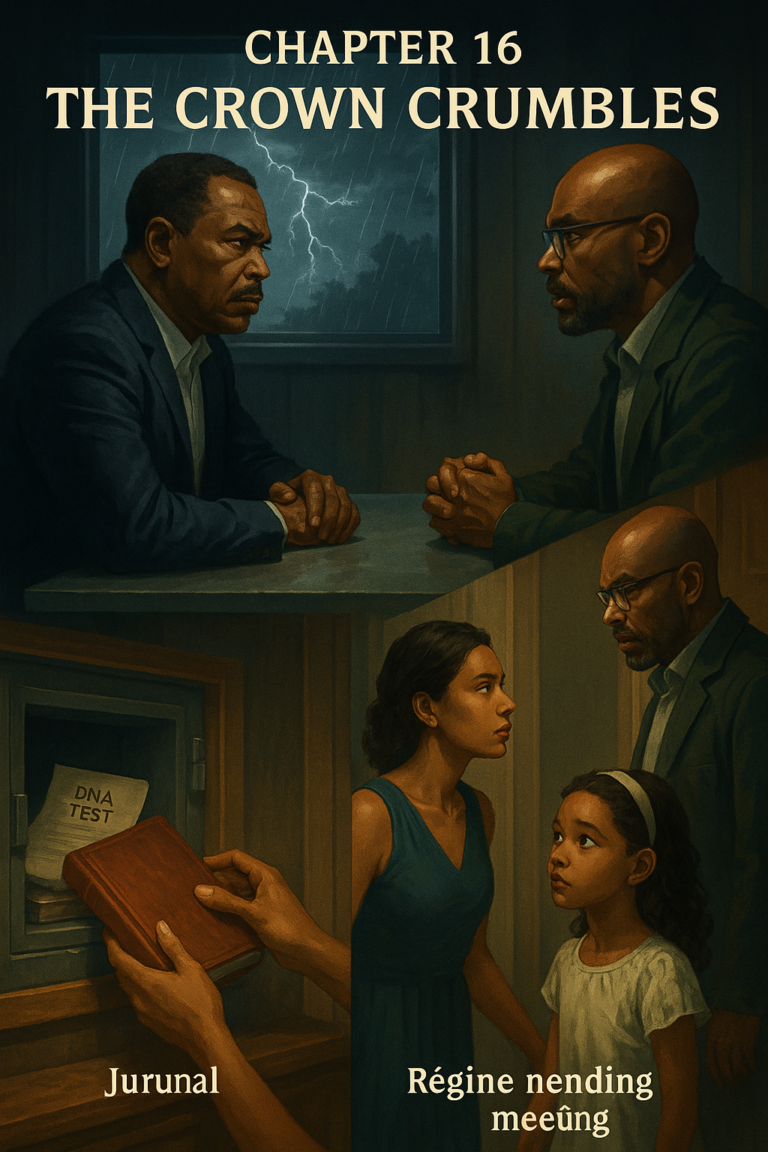
Chapter 16: “The Crown Crumbles”

The echoes of Robert Figaro’s arrest hadn’t even faded before the media frenzy turned Port-au-Prince into a boiling pot of speculation. Cameras flashed. Rumors exploded. The mighty Figaro name, once synonymous with wealth and authority, now splashed across tabloids with headlines like “King of Corruption Falls” and “From Empire to Ashes?”

Inside the cold, gray interrogation room, Robert Sr. sat unbothered—until the door creaked open. The figure entering wasn’t just another officer—it was Detective Renald Dorval, a name whispered in fear throughout Haiti’s underworld. “You thought the kingdom was untouchable, Robert?” he asked, sliding a folder across the table. “Let’s talk about your son.

The folder cracked open with a photo: Robert Jr., caught in what appeared to be an exchange with a known arms dealer in Venezuela. Robert Sr.’s confident smirk melted. “That’s not possible,” he muttered.

Meanwhile, back at the Figaro estate, chaos ruled. Marie-Elizabeth, still reeling from her father’s arrest, turned her attention to the vault hidden behind the study’s portrait wall. She was following clues her mother once left behind—a trail laced in guilt, romance, and secrets. Inside the vault, a hidden journal revealed a decade-old affair—not just between Fernande and Theodore Fillier, but something even darker.

BOMBSHELL:

Fernande wasn’t just Theodore’s lover—she was his accomplice. Together, they had orchestrated the entire insurance fraud scheme that launched the Figaro wealth years ago. The discovery of forged land deeds and false identities stunned Marie-Elizabeth. Her mother had been the architect of their empire’s greatest lie.

But the real shock?

BOMBSHELL:

A DNA report was hidden in the back of the journal—confirming Theodore Fillier is Régine’s biological father.

Régine, only 14, overheard the commotion. Tears welled in her eyes, but instead of retreating, she walked straight into the storm, clutching her mother’s old scarf like armor.

“I want to meet him,” she whispered.

In a luxury penthouse in Petion-Ville, Theodore stared at a framed photo of Régine he’d secretly kept for years. His phone buzzed: “She knows. She’s coming.”

Across town, an unexpected player entered the game.

BOMBSHELL:

The young boy seen in recent family photos—the quiet one with fierce eyes? He wasn’t adopted. He was the late Jacques Figaro’s son, hidden after a forbidden affair with a servant. Now 11, he carried documents declaring himself a legitimate heir to the Figaro empire.

In the dark corner of a local hotel bar, Clarisse—Robert Sr.’s ex-mistress—made a cryptic call. “Now that the boy has surfaced, we strike. We take everything.”

The Chapter Closes On:

A stormy night. Thunder crashes. Robert Sr., now transferred to a high-security cell, is visited by Theodore Fillier himself. The two stare across the table—former allies turned adversaries.

“Tell me, Robert,” Theodore said with a calm fury. “How does it feel to lose everything you built on lies?”

Robert leaned forward, eyes blazing.

“I’m not finished yet.”

Maires en Résistance : L’Autodéfense S’organise Face à la Montée des Gangs en Haïti

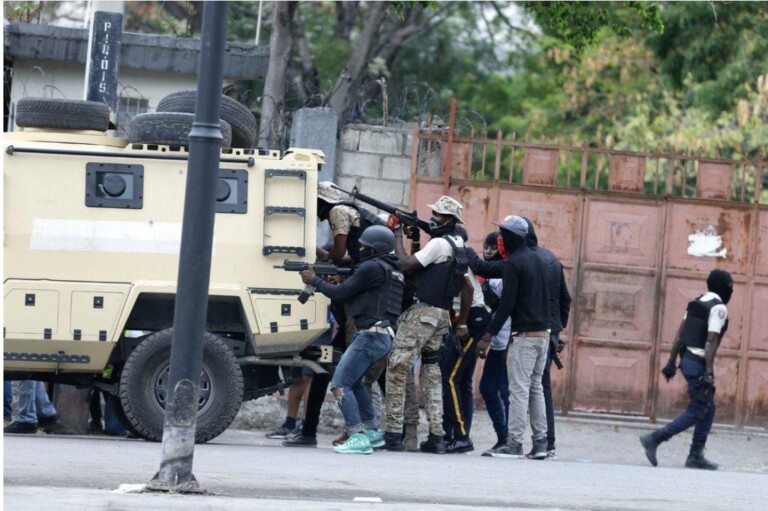
Alors qu’Haïti sombre davantage dans une crise sécuritaire d’une ampleur historique, les autorités locales sont devenues les derniers remparts de la République. En première ligne face à l’assaut des gangs lourdement armés, de nombreux maires redoublent d’efforts pour défendre leurs communes et organiser la résistance populaire, avec un courage digne des grandes pages de l’histoire haïtienne.

Dans les régions les plus affectées – notamment dans l’Ouest, l’Artibonite et le Centre – les autorités municipales ne se contentent plus de simples appels à l’aide. Elles coordonnent activement la défense civile aux côtés des forces de police et des rares unités encore opérationnelles des Forces Armées d’Haïti (FADH).

Tabarre : Une Ligne de Front Tenue par le Maire et la Police

À Tabarre, le maire Arsonval Alexandre fait preuve d’une détermination farouche. Il a confirmé que les forces de police ont repoussé, le jour précédent, une offensive concertée de quatre gangs puissants, une démonstration inquiétante de la coordination entre les groupes criminels.

Grâce à l’appui d’équipes de renseignement local et à l’utilisation récente de drones pour surveiller les zones boisées ou désertes, la commune tient bon malgré l’encerclement quasi constant.

Mirebalais : Une Résistance Inspirante Menée Depuis la Ville

À Mirebalais, le maire Lochard Laguerre est devenu une figure de résistance. Face à l’aggravation de la crise, il a multiplié ses interventions dans les médias locaux et mobilisé la population civile. Il a aussi coordonné avec des organisations de la société civile pour lancer une contre-offensive citoyenne, laquelle a permis de desserrer l’étau des gangs autour de la ville.

La solidarité entre les habitants et les forces de l’ordre a été saluée comme un modèle de résilience collective.

Kenscoff : Un Maire Engagé dans la Guerre de l’Information

Dans les montagnes de Kenscoff, où l’accès est particulièrement difficile, le maire entretient une communication constante avec la police locale. Il transmet des informations précieuses sur les mouvements et les stratégies des groupes armés qui exploitent le terrain accidenté pour établir des bases d’attaques.

Il plaide, lui aussi, pour le recours accru à la technologie, notamment les drones, pour compenser le manque criant de personnel et de matériel militaire dans ces zones reculées.

Pétion-Ville : Une Commune Sous Pression, Mais Résistante

Récemment, le maire de Pétion-Ville a souligné les efforts conjoints de la mairie et des forces de sécurité, notamment lors de plusieurs tentatives d’incursion repoussées par des patrouilles mixtes de police municipale et nationale.

Pétion-Ville, malgré sa densité urbaine et ses enjeux géopolitiques, continue de faire preuve d’une résilience admirable, en grande partie grâce à l’unité de ses citoyens et de ses dirigeants.


Un Mouvement National d’Autodéfense en Marche

Face à l’inefficacité des mécanismes centraux, les maires et les citoyens prennent leur destin en main. Cette dynamique d’autodéfense, appuyée par des comités communautaires, s’intensifie dans plusieurs communes du pays, notamment à Saint-Marc, Gressier, Hinche, Lascahobas et Jacmel.

De nombreux maires, bien que faiblement armés et sans véritable soutien institutionnel, tentent de préserver l’ordre public avec des ressources limitées. Leurs actions incluent l’organisation de rondes nocturnes, la surveillance communautaire, l’aide humanitaire, et même la formation de jeunes au secours d’urgence.


L’Appel à la Solidarité Internationale et à la Diaspora

Alors que la Mission multinationale de soutien à la sécurité (MMSS), prévue pour aider Haïti, tarde à se déployer pleinement, les maires appellent à une mobilisation immédiate de la diaspora haïtienne et des partenaires internationaux.

“La paix ne peut revenir sans l’implication directe des Haïtiens eux-mêmes, à l’intérieur comme à l’extérieur du pays. C’est notre combat commun,” a déclaré le maire de Mirebalais.

Les communautés locales ne demandent pas une guerre, mais une chance de survivre. Une aide logistique, des équipements de communication, de la nourriture, des médicaments et un soutien moral sont désormais des nécessités vitales.


Un Dernier Rempart de Dignité

Dans un pays où l’État central semble paralysé et où les institutions régaliennes sont en ruine, les maires apparaissent comme les derniers défenseurs de la République. Leur courage, leur ténacité, et leur proximité avec la population en font des figures d’espoir et de résilience.

Alors que la violence continue de s’intensifier, leur engagement rappelle aux Haïtiens que l’esprit de Dessalines, Louverture et Pétion ne s’est jamais éteint. Il renaît aujourd’hui dans les rues, les montagnes, les ruelles barricadées, où le peuple se bat encore pour son droit à vivre.

Metropole, D’haiti: Les Maires s’activent à défendre leurs communes

The Dictator’s Mindset: How to Recognize the Signs Before It’s Too Late

History has shown us that dictators do not rise to power overnight—they manipulate, deceive, and slowly erode democratic systems until they can rule unchallenged. Their mindset is marked by a thirst for absolute control, a disregard for human rights, and a refusal to accept opposition. Understanding the language and tactics they use is crucial to identifying the early warning signs of authoritarian rule.

The Dictator’s Mindset: Key Traits

  1. Absolute Control Over Power
    • Dictators do not share power. They view themselves as the ultimate authority and seek to weaken institutions that could challenge them.
    • Example: Joseph Stalin purged his own Communist Party members to eliminate any threats to his rule.
  2. Silencing the Press and Critics
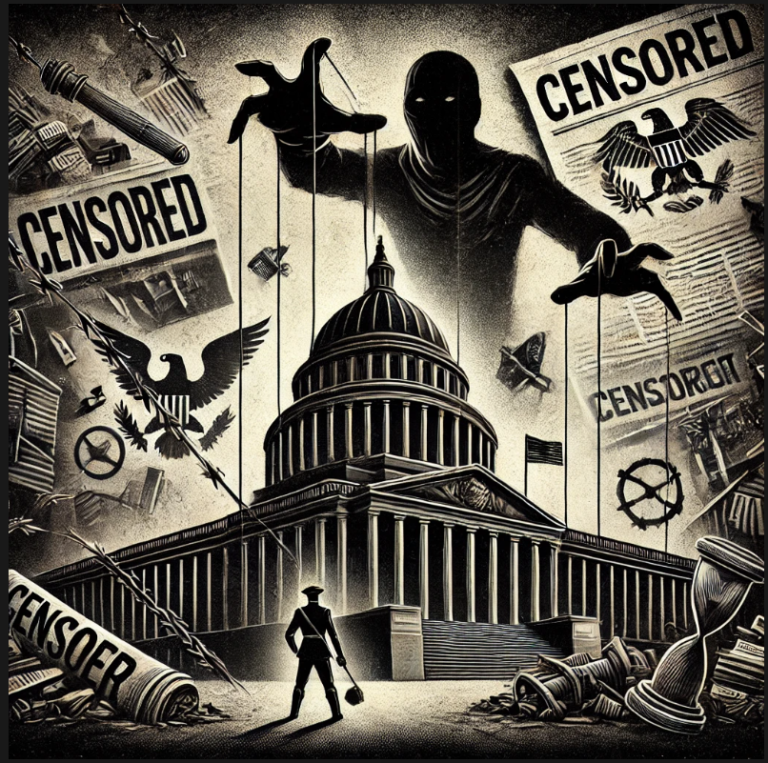
    • Independent media is one of the first targets of a dictator. They label any criticism as “fake news” or “enemy propaganda.”
    • Example: Adolf Hitler took control of German newspapers, ensuring that only state-approved messages were published.
  3. Creating an ‘Enemy’ to Blame
    • Dictators often unite their followers by scapegoating a particular group—immigrants, minorities, political opponents, or foreign nations.
    • Example: Benito Mussolini blamed Italy’s struggles on foreigners and communists, using fear to justify authoritarian rule.
  4. Disregard for Laws and Institutions
    • Instead of following the law, dictators change it to suit their needs, removing limits on their power.
    • Example: Vladimir Putin altered the Russian constitution to extend his presidency indefinitely.
  5. Claiming to ‘Save’ the Nation
    • They present themselves as the only leader capable of “restoring order” or “making the country great again.”
    • Example: Hugo Chávez of Venezuela claimed he was fighting for the poor while consolidating power and silencing opponents.
  6. Demonizing the Opposition
    • Anyone who disagrees is labeled as a “traitor,” “enemy of the people,” or part of a conspiracy.
    • Example: Nicolás Maduro of Venezuela accused opposition leaders of being foreign agents to justify jailing them.
  7. Using Religion and Nationalism as Tools
    • Dictators often align themselves with religious leaders or nationalistic causes to gain unquestioned loyalty.
    • Example: Francisco Franco of Spain used Catholicism as a tool to justify his dictatorship.
  8. Rewriting History
    • They manipulate or erase history to paint themselves as heroes and previous leaders as villains.
    • Example: North Korea’s Kim dynasty rewrote history to claim divine rule over their people.
  9. Encouraging Political Violence
    • Dictators use violence or intimidation to suppress opposition, often deploying military forces against their own people.
    • Example: Bashar al-Assad of Syria ordered violent crackdowns on protests, leading to a devastating civil war.
  10. No Room for Negotiation—Only Force
  • Dictators do not negotiate in good faith. If they engage in talks, it’s often a ploy to gain time or resources.
  • Example: Saddam Hussein would engage in diplomatic talks while simultaneously preparing for military aggression.

Dictators Don’t Negotiate—They Take by Force

While democratic leaders use diplomacy to solve disputes, dictators operate differently. They see compromise as weakness and prefer to seize what they want through coercion or brute force.

  • Hitler didn’t negotiate; he invaded Poland and triggered World War II.
  • Stalin didn’t discuss policy differences; he executed or exiled his opponents.
  • Putin didn’t debate Ukraine’s independence; he launched a war.

How to Stop Dictators Before It’s Too Late

Recognizing these signs early can help prevent a democracy from sliding into authoritarianism. Citizens must:

  • Defend the free press against government control.
  • Vote and ensure leaders are held accountable.
  • Resist fear-mongering and scapegoating tactics.
  • Speak out against threats to democracy.
  • Protect institutions that keep power in check.

History warns us that dictators only stop when the people demand it. Staying informed and engaged is the best defense against tyranny.

Understanding Apartheid and Segregation: Historical Contexts and Contemporary Implications

Apartheid in South Africa and racial segregation in the United States represent two of the most egregious systems of institutionalized racial discrimination in modern history. While both sought to enforce racial hierarchies, their origins, implementations, and legacies exhibit distinct differences. In contemporary times, concerns have arisen regarding influential figures, such as Elon Musk, and their potential roles in perpetuating systemic inequalities.

Defining Apartheid and Segregation

Apartheid, derived from the Afrikaans word for “apartness,” was a legally enforced system in South Africa from 1948 to the early 1990s. It mandated racial segregation across all facets of life, including education, healthcare, and housing, to maintain white minority dominance. Non-white South Africans were systematically disenfranchised, dispossessed, and subjected to severe restrictions on movement and association. 

In contrast, racial segregation in the United States, particularly prominent from the late 19th century through the mid-20th century, was characterized by the “separate but equal” doctrine. Enforced through Jim Crow laws, this system relegated African Americans to inferior public facilities, schools, and services, predominantly in Southern states. While both systems enforced racial separation, apartheid was a nationwide policy in South Africa, whereas segregation in the U.S. varied by state and region.

Contemporary Reflections and Elon Musk’s Influence

Elon Musk, born in South Africa in 1971 during the apartheid era, emigrated to the United States as a teenager. His formative years in a racially stratified society have prompted discussions about how these experiences may influence his perspectives and business practices. Critics argue that Musk’s upbringing in an environment of systemic racial inequality could unconsciously inform his views on social and economic issues. 

Recent reports have highlighted Musk’s involvement in political discourse, particularly his support for policies that some perceive as favoring affluent individuals and corporations. For instance, Musk has expressed opposition to affirmative action laws, suggesting they impede merit-based progress. Such positions have raised concerns about the potential reinforcement of existing social disparities. 

Steps to Address Systemic Inequalities

To counteract potential influences that may perpetuate systemic inequalities, individuals and communities can consider the following actions:

1. Advocate for Inclusive Policies: Engage with policymakers to support legislation that promotes equity and addresses historical injustices. This includes backing affirmative action and diversity initiatives that aim to level the playing field.

2. Support Ethical Business Practices: Patronize companies that demonstrate a commitment to social responsibility, inclusivity, and equitable treatment of all employees.

3. Promote Media Literacy: Critically assess information sources and be wary of narratives that may perpetuate stereotypes or biases. Supporting independent journalism can provide more balanced perspectives.

4. Engage in Community Dialogue: Participate in discussions that foster understanding and collaboration across different racial and socioeconomic groups. Grassroots movements can be powerful catalysts for change.

5. Hold Leaders Accountable: Use civic channels to question and challenge public figures whose actions or policies may contribute to societal divisions or inequalities.

Conclusion

While apartheid and segregation are historical constructs, their legacies persist in various forms today. Awareness and proactive engagement are essential in challenging and dismantling systemic inequalities. By advocating for inclusive policies, supporting ethical practices, and fostering open dialogue, society can work towards a more equitable future.

PNFPB Install PWA using share icon

For IOS and IPAD browsers, Install PWA using add to home screen in ios safari browser or add to dock option in macos safari browser

New Report

Close